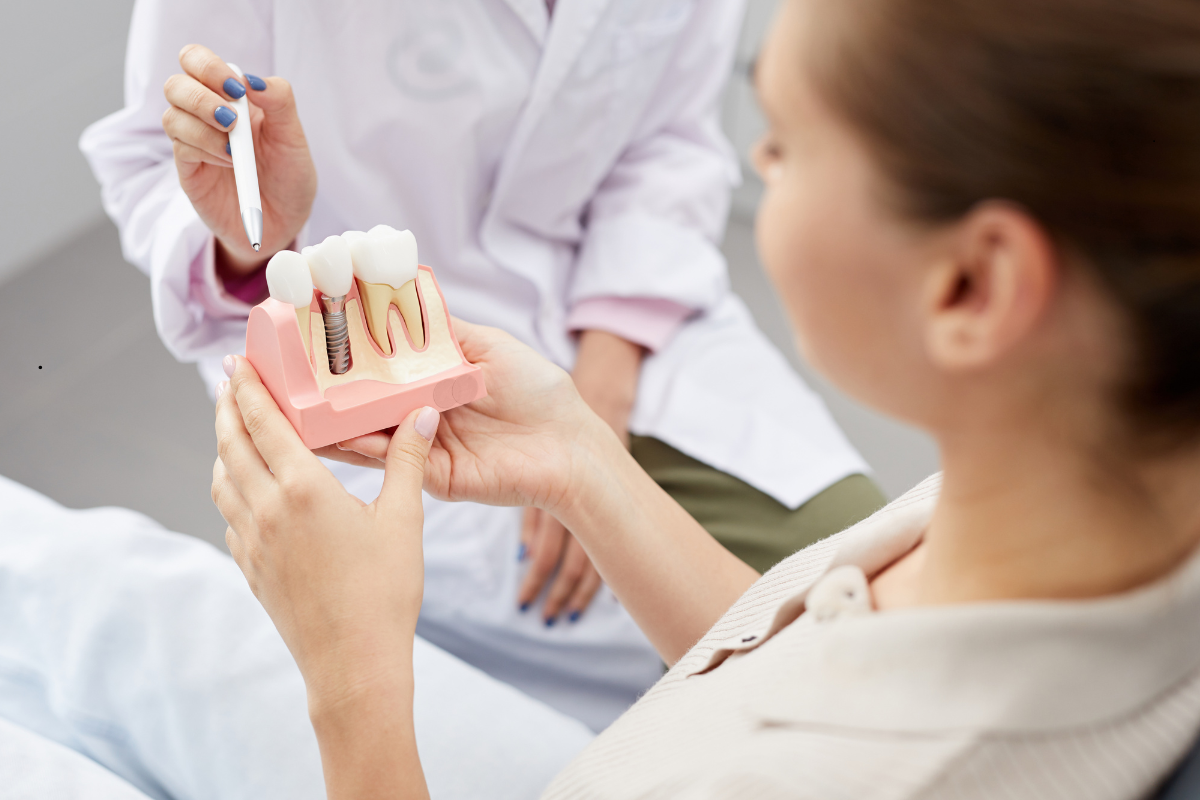
A root canal that’s failing for the second time isn’t just an inconvenience; it’s a decision point. Do you retreat a tooth that keeps sending up warning signs, or replace it with something built to outlast it? The honest answer usually comes down to long-term math: how many more years of predictable function will this tooth give you, versus a titanium implant designed to integrate with your jawbone for decades?
That’s the question we sit down with patients to answer every week. The team at Comfort Family Dental, where Dr. Richard Schwarcz and Dr. Ami Schwarcz have spent years helping patients weigh exactly this trade-off with clear, judgment-free guidance. If you’re staring down a second retreatment and wondering whether it’s worth it, book an appointment with us, and we’ll walk through your specific tooth, your bone health, and your options together.
What Makes a Root Canal Fail a Second Time?
A root canal typically fails when bacteria re-enter the tooth through a cracked root, a leaking crown margin, or a missed canal that was never fully cleaned out the first time. Once infection returns after an initial treatment, the surrounding bone and remaining tooth structure have usually already taken some damage, which lowers the odds that a second attempt will hold.
Retreatment is a legitimate option in many cases, and a trusted restorative dentist in Center Line will always evaluate it first before recommending anything more invasive. But retreatment success rates drop compared to a first-time root canal, largely because the tooth has less healthy structure to work with and the reinfection pathway is harder to fully seal. Cracks are a dealbreaker in particular; a vertically fractured root cannot be sealed no matter how well the canal is cleaned, and it will keep leaking bacteria until the tooth is extracted.
How Long Does a Treated Tooth Actually Last?
There’s no fixed expiration date on a root canal-treated tooth, but its lifespan depends heavily on how much natural structure remains and how well the final restoration seals it. A heavily restored tooth with a large crown and thin remaining walls is fundamentally more fragile than one with most of its original structure intact, and that fragility compounds with every additional procedure performed on it.
This is where the “keep treating it” instinct can quietly work against you. Every retreatment removes a little more tooth structure, weakens the remaining walls further, and narrows the margin for error on the next restoration. At some point, a tooth isn’t failing because the dentistry was done poorly; it’s failing because there simply isn’t enough tooth left to reliably hold a seal. Recognizing that turning point early, rather than after a third failed attempt, is often what separates a smooth transition to an implant from a painful, drawn-out extraction under infection.
Why Implants Are Built for the Long Haul
A dental implant is designed to function differently than a natural tooth root, which is precisely why it doesn’t inherit the same failure risks. As the titanium post fuses directly with your jawbone through osseointegration, it isn’t vulnerable to the internal cracks, canal reinfections, or crown-margin leaks that eventually catch up with a heavily treated natural tooth.
Research backed by the National Institute of Dental and Craniofacial Research, part of the National Institutes of Health, has found that clinical studies generally report implant survival rates in the range of 95 to 98 percent over long-term follow-up. That’s a meaningfully different risk profile than a tooth that has already required more than one root canal.
An implant also stops the bone loss that naturally follows tooth loss, since the post itself continues to stimulate the jawbone every time you bite and chew something a saved-but-fragile natural tooth cannot do once it’s extracted down the road anyway.
Root Canal Retreatment vs. Dental Implant: A Side-by-Side Look
| Factor | Retreated Root Canal | Dental Implant |
| Underlying structure | Natural tooth, often weakened by prior treatment | Titanium post fused to jawbone |
| Vulnerability to reinfection | Possible if canal or crown margin leaks again | Not applicable, no canal to reinfect |
| Long-term bone preservation | Depends on tooth survival | Actively maintained through chewing stimulation |
| Risk with cracked roots | Treatment usually cannot succeed | Not a factor |
| Long-term outlook | Uncertain after repeat failures | Strong track record over decades |
Signs It’s Time to Stop Retreating and Start Planning
- Recurring infection at the same tooth after a prior root canal
- A visible or suspected crack in the root on imaging
- Minimal remaining healthy tooth structure under the crown
- Bone loss already visible around the root tip
- A pattern of symptoms returning within a year or two of treatment
If two or more of these apply to your situation, it’s worth having the conversation before the tooth forces the decision for you in the middle of an infection flare-up.
Frequently Asked Questions
1. How many times can a root canal be retreated before it’s considered a failure?
Most dentists reconsider after a second failure on the same tooth. Repeated retreatment weakens the tooth further and lowers the odds of long-term success.
2. Does a failing root canal always cause pain?
Not always; some failures show up only on X-rays as bone loss around the root tip. Regular checkups catch these silent failures before symptoms appear.
3. Can a cracked tooth root ever be saved with a root canal?
Generally, no. A vertical root fracture cannot be sealed, regardless of how thoroughly the canal is cleaned. Extraction and replacement are usually the only reliable path forward.
4. Is bone grafting always needed before getting an implant?
Not always; it depends on how much healthy bone remains at the site. A diagnostic scan determines whether grafting is necessary before placement.
5. Do implants feel different from a natural tooth when chewing?
Most patients report implants feel stable and natural once fully healed. Sensation differs slightly since there’s no root nerve, but function is comparable.
6. What happens if a failing root canal tooth is simply left untreated?
The infection can spread to surrounding bone and even neighboring teeth over time. Left long enough, it often leads to a more complicated extraction later.
7. How soon after a tooth is removed can an implant be placed?
Timing depends on infection status and bone quality at the extraction site. Some cases allow immediate placement, while others need a short healing period first.
Making a Confident, Informed Choice
Every mouth tells a different story, which is why a blanket rule like “always save the tooth” or “always implant” doesn’t actually serve patients well. What does serve you well is a dentist who looks at your specific root anatomy, bone density, and treatment history and gives you a straight answer about which option will actually last. A capable restorative dentist in Center Line will walk you through both paths honestly, including the scenarios where retreatment genuinely is the smarter, more conservative choice.
If you’ve had more than one root canal on the same tooth, or you’re bracing for a conversation about whether it’s time to consider an implant, don’t make that call alone. Visit our dental office for a personalized diagnostic evaluation, where we’ll look at your imaging, your bone structure, and your goals before recommending anything. Reach out and book an appointment with us, and let’s figure out the option built to actually last.
**Disclaimer: This content should not be considered medical advice and does not imply a doctor-patient relationship.