There is a question that most people never think to ask their dentist, and it is one of the most important questions in dentistry: how much of my natural tooth are you planning to remove? The prevailing model in dental care for much of the twentieth century was aggressive: drill out the decay, shape the tooth, fill the gap. When cosmetic work became popular, the model often remained the same: prepare the tooth, reduce the enamel, cement the restoration. It was effective in the short term, but it came at a cost that compounded over decades.
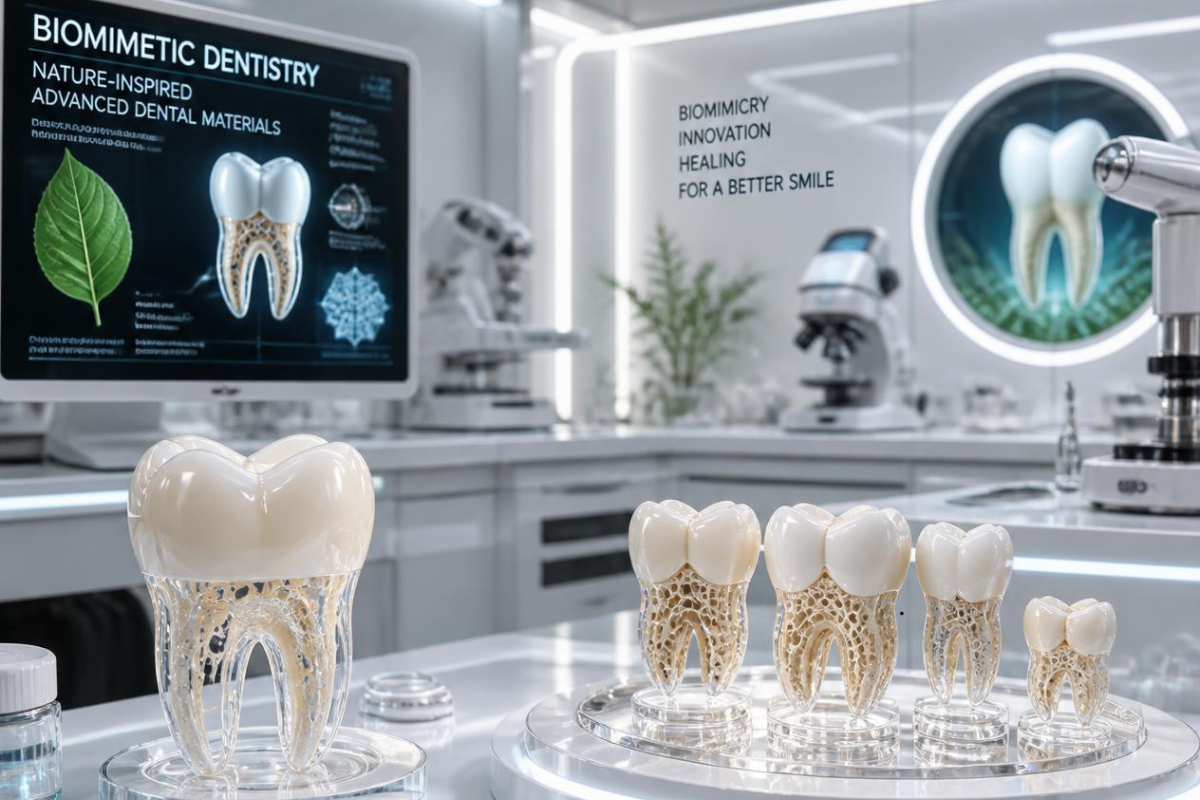
Biomimetic dentistry is a fundamentally different philosophy — one built around the idea that the best dental work mimics what nature created, uses what the body provides, and removes only what truly needs to go. At Comfort Family Dental in Center Line, Dr. Richard Schwarcz and Dr. Ami Schwarcz apply biomimetic principles to cosmetic and restorative work, offering patients throughout the Center Line, Warren, and greater Detroit area the kind of care that a Center Line cosmetic dentist with a long-term perspective on tooth preservation would naturally choose to deliver.
What Biomimetic Dentistry Actually Means
The word biomimetic comes from the Greek words for life (bios) and to imitate (mimesis). In dentistry, it means designing restorations and treatments that behave the way natural tooth structure behaves — that flex and compress under bite forces the way enamel and dentin do, that seal against the tooth in a way that resists bacterial infiltration, and that do not introduce stress concentration points that can lead to fracture over time.
Traditional dental materials, amalgam and conventional crown preparations in particular, often require significant removal of healthy tooth structure to create the shape and retention the restoration needs. Biomimetic dentistry takes a different approach: it uses advanced bonded materials that adhere directly to the tooth structure, requiring far less removal and producing restorations that are mechanically integrated with the tooth rather than simply placed on top of it.
Why This Matters for Cosmetic Dental Work
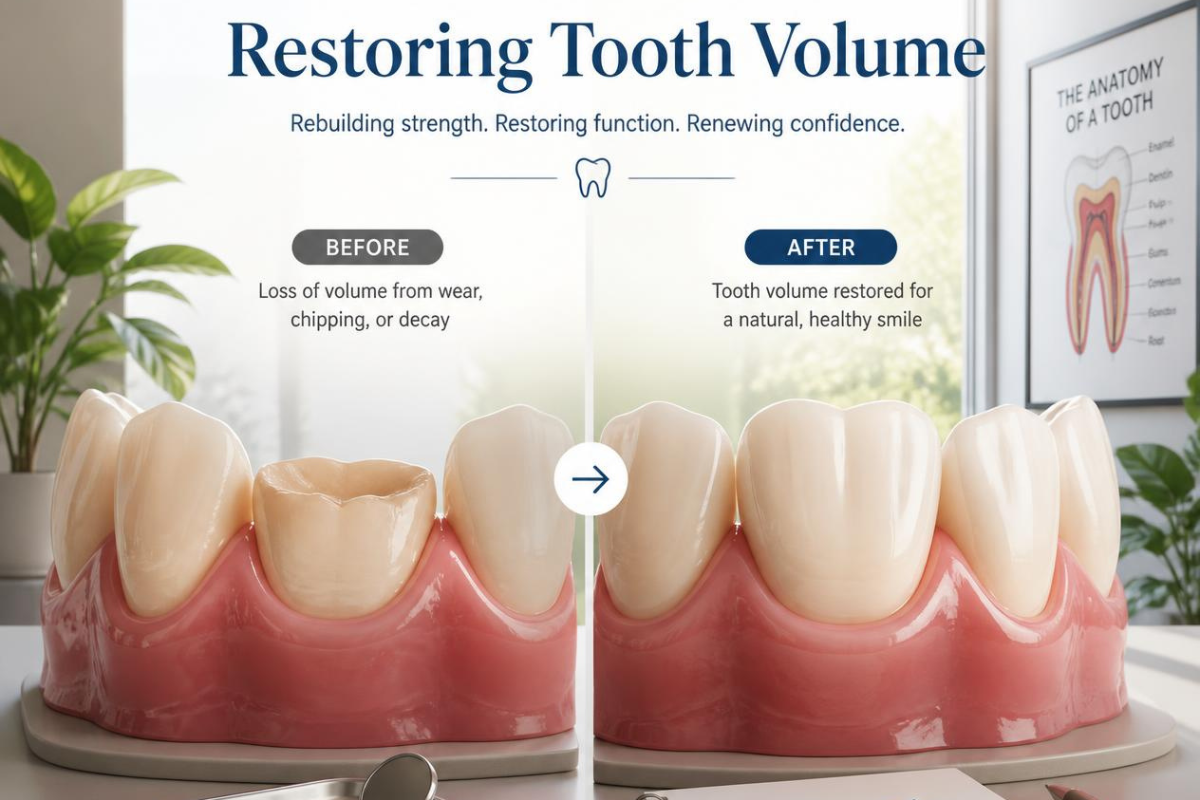
Cosmetic dentistry has a complicated history with tooth preparation. The beautiful results that porcelain veneers can produce have sometimes come at the price of significant enamel removal — removing a layer of perfectly healthy tooth structure to accommodate the thickness of the veneer. For some patients and some clinical situations, that trade-off is appropriate. For many others, it is not.
Biomimetic cosmetic dentistry asks: how much of this tooth actually needs to be altered to achieve the result the patient wants? In many cases, the answer is substantially less than traditional approaches would require.
How the Biomimetic Approach Changes Specific Cosmetic Treatments
Veneers
- Traditional veneers require removing a layer of enamel — typically between 0.3 and 0.7 millimeters from the front surface of the tooth. This is permanent and commits the tooth to always needing a covering.
- No-prep or minimal-prep veneers — made possible by ultra-thin porcelain fabrication and advanced bonding technology- can achieve comparable cosmetic results with little to no enamel removal in appropriate cases.
- The choice between these approaches depends on the patient’s specific anatomy, current tooth shade, the degree of cosmetic correction needed, and whether the tooth is already heavily restored. At Comfort Family Dental, Dr. Schwarcz evaluates each case with tooth preservation as a primary goal — recommending more aggressive preparation only when it is genuinely required for the clinical outcome.
Crowns — When a Crown Is and Is Not the Right Answer
- A full crown requires removing a significant amount of healthy tooth structure to accommodate the crown’s thickness on all surfaces. For a badly damaged or structurally compromised tooth, this is appropriate and necessary.
- For teeth that are less severely damaged, biomimetic onlays and inlays — laboratory-fabricated restorations that cover only what is damaged rather than the entire tooth — are often the better choice. They bond directly to remaining tooth structure, preserve cusps that are still intact, and produce a restoration that distributes bite forces more naturally.
- Research in biomimetic dentistry has shown that these bonded restorations seal more effectively at their margins than traditional crown preparations, reducing the risk of recurrent decay and extending the functional lifespan of the restoration.
Composite Bonding Done Right
- Composite bonding — applying tooth-colored resin directly to the tooth surface — is inherently conservative. But the quality of the outcome depends heavily on the material selected, the layering technique used, and how well the bonding system integrates the restoration with the tooth.
- Biomimetic bonding protocols prioritize creating a seal between material and tooth that resists microleakage — the microscopic penetration of bacteria and fluid at the restoration margin that causes staining, sensitivity, and secondary decay over time.
- The result is bonded cosmetic work that both looks better and lasts longer than bonding applied with a less rigorous protocol — relevant for Center Line, Warren, and Detroit patients who want a worthwhile long-term investment in their smile.
The Long-Term Case for Tooth Preservation
Every time a tooth is prepared — enamel is removed, dentin is exposed, the structure of the tooth is altered — it enters a different tier of vulnerability. The removed enamel does not grow back. A tooth that has been crowned once may eventually need to be crowned again, and with less natural structure remaining each time, the escalation of treatment over decades can be significant.
Biomimetic dentistry interrupts that cycle early. By treating the minimum required at each stage, natural tooth structure is preserved for as long as possible — which means simpler treatment options remain available longer, and the long-term health and integrity of the tooth is protected in a way that aggressive early preparation simply cannot provide.
Frequently Asked Questions
Q: Is biomimetic dentistry appropriate for all cosmetic cases?
A: Not always. The biomimetic approach guides treatment planning but does not override clinical realities. Some teeth are too severely damaged to benefit from conservative approaches — a cracked tooth with insufficient remaining structure genuinely needs a crown, regardless of philosophy. What changes with biomimetics is that the threshold for more aggressive treatment is set by the tooth’s condition, not by habit or convenience.
Q: Does biomimetic work look as good as traditional cosmetic dentistry?
A: Yes, and in many cases better. The precision of modern ceramic and composite materials, combined with rigorous bonding protocols, produces restorations that are indistinguishable from natural teeth — while preserving more of the tooth beneath them. The aesthetic outcome is not a compromise; it is the same standard applied with a more conservative preparation approach.
Q: I have been told I need a crown — could a biomimetic approach change that?
A: Possibly. Getting a second opinion from a dentist trained in biomimetic principles is always worthwhile when a crown has been recommended. In some cases, an onlay or inlay is a more appropriate and less aggressive alternative. Dr. Richard Schwarcz and Dr. Ami Schwarcz are happy to evaluate any prior recommendation and provide an honest assessment.
Q: Is biomimetic dentistry more expensive?
A: The upfront cost is often comparable to traditional approaches, and the long-term cost is frequently lower — because preserving natural tooth structure reduces the likelihood of escalating to more complex, expensive treatment over time. A tooth that avoided a crown at age 40 because of a well-placed onlay may never need that crown at all. That is a meaningful financial difference over a lifetime of dental care.
Cosmetic Dentistry That Respects What You Already Have
Your natural teeth are irreplaceable, and the decisions made today about how much of them to preserve will matter for decades. At Comfort Family Dental in Center Line, Dr. Richard Schwarcz and Dr. Ami Schwarcz bring a biomimetic perspective to every cosmetic case, ensuring that the pursuit of a better-looking smile does not come at the expense of what makes that smile last. If you are considering cosmetic dental work and want guidance from a team that genuinely prioritizes your long-term oral health, schedule a consultation at mycomfortfamilydental.com today.
**Disclaimer: This content should not be considered medical advice and does not imply a doctor-patient relationship.